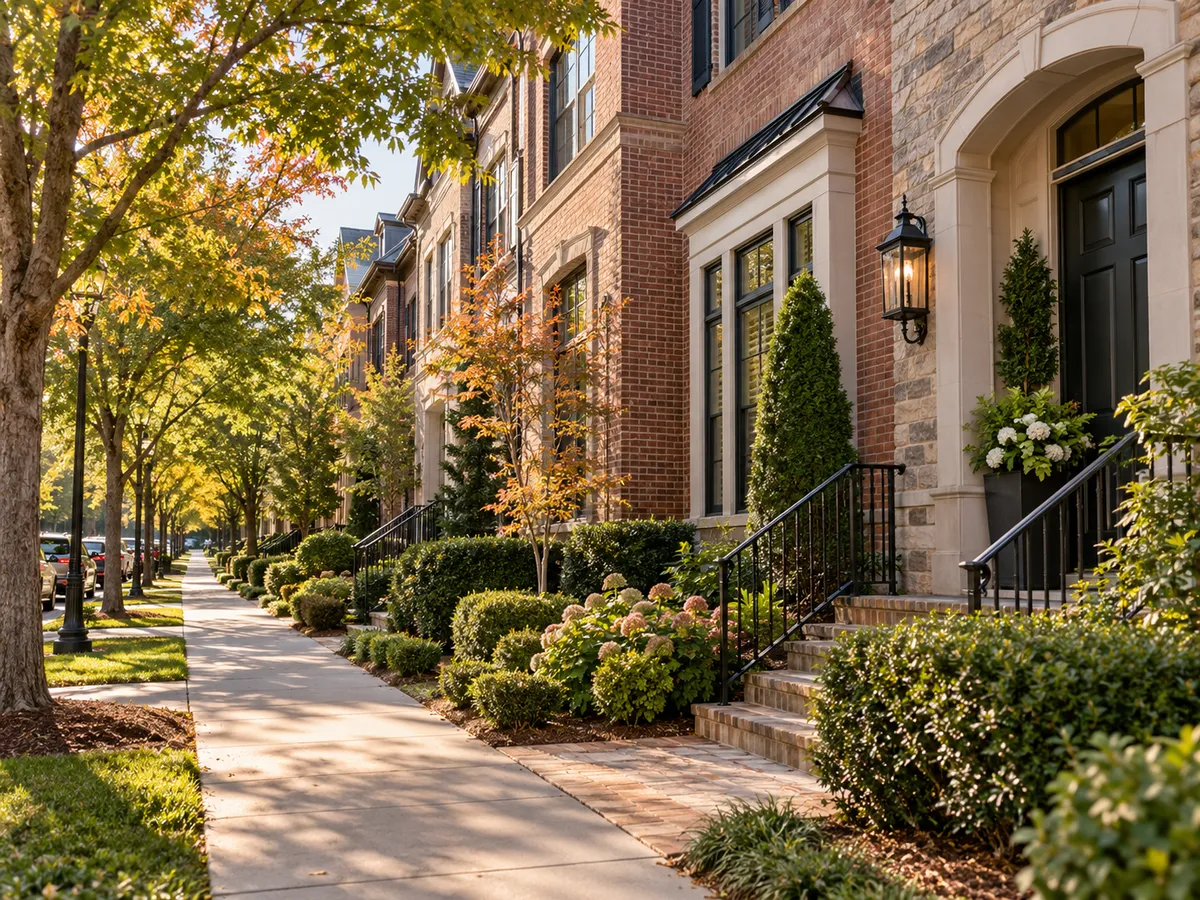
Is a 5/1 ARM a Smart Choice for Your First Home in Ballantyne?
A 5/1 adjustable-rate mortgage can be a smart choice for a first home in Ballantyne, but only if you can afford the payment after the rate is allowed to change and you have a real plan for year six. The lower payment is real. So is the risk.
If you're a first-time buyer, you've probably heard both sides by now. One friend says an ARM saved them hundreds a month. Another says it's a trap. Both are partly right, so let me give you the math and the questions to ask.
I'm Jennifer Ledford with The Ledford Group at eXp Realty. I work with first-time buyers around Ballantyne and South Charlotte, and this is one of the questions I hear most right now. I'm a real estate agent, not a lender, so your loan officer has the final word on your numbers. My job is to make sure you walk into that conversation knowing what to ask.
Quick Answer: A 5/1 ARM keeps the same interest rate for five years, then the rate can go up or down each year after that. According to the Mortgage Bankers Association, the 5/1 ARM averaged 6.10% for the week ending September 18, 2026, compared with 7.12% for a 30-year fixed loan. For a first-time Ballantyne buyer, it can make sense if you expect to sell or refinance within five years and could still afford the higher payment if the rate rises. If you couldn't, a fixed rate is the safer choice.
What is a 5/1 adjustable-rate mortgage?
A 5/1 ARM is a home loan with two phases. For the first five years, your interest rate stays put. After that, the rate can change once a year for the rest of the loan.
The "5" is how many years the rate is locked. The "1" is how often it can change afterward. Most ARMs are still 30-year loans, so you have 25 more years after the fixed period ends.
When the rate can change, it follows an index plus a set margin, and the loan has caps that limit how much it can move each time and over the life of the loan. Those caps are different from loan to loan. That is the first thing to look up in your paperwork, and I'll come back to it below.
Why are more buyers choosing ARMs right now?
Because fixed rates went up and ARM rates didn't go up as much. It is that simple.
The Mortgage Bankers Association reported that ARMs made up 9.8% of mortgage applications for the week ending September 18, 2026, up from 8.4% the week before. That's close to 1 in every 10 applications. The MBA's chief economist, Mike Fratantoni, said that with fixed rates much higher, more borrowers chose ARMs, because 5/1 ARM rates were more than a percentage point lower than fixed rates.
Freddie Mac's weekly survey tells the same story from a different angle. It put the average 30-year fixed rate at 7.03% on September 24, 2026, the highest reading in its 52-week range. Freddie Mac releases a new number every Thursday, so check the latest before you make any decision. The MBA and Freddie Mac use different surveys, which is why their numbers don't match exactly.
When a rate jumps, buyers look for a way to get the payment back down. An ARM is one of the few tools that does it without changing the price of the house.
How much can you save with a 5/1 ARM?
On a $400,000 loan, the difference is about $270 a month. Let me show you where that comes from.
At 7.12%, the monthly principal-and-interest payment on a 30-year fixed loan is about $2,694. At 6.10%, the starting payment on a 5/1 ARM is about $2,424. That's roughly $270 a month, or about $3,240 a year, in your pocket for the first five years.
Over the full five years, that adds up to around $16,200. For a first-time buyer trying to build a cushion for repairs, furniture, and the first winter heating bill, that is a real number.
Two notes. This counts only principal and interest, so your taxes, homeowners insurance, and any mortgage insurance come on top. And the rates I used are national survey averages, not a quote. Your rate depends on your credit, your down payment, and the lender.
What happens to the payment after year five?
This is the part that decides whether an ARM is smart or stressful, so here is a worked example. This is my own math to show how it works, not a prediction of where rates will go.
Say you borrow $400,000 on a 5/1 ARM at 6.10%. After 60 payments, you would still owe about $372,700. Now say the rate adjusts at the start of year six, and 25 years remain on the loan.
- If the rate resets to 7.10%, your new payment would be about $2,658. - If it resets to 8.10%, your new payment would be about $2,901. - If it resets to 10.10%, your new payment would be about $3,413.
Look at the middle line. At 8.10%, you'd be paying about $477 more a month than you were in year five. That is a rise of nearly 20%.
Could the rate also stay flat or go down? Yes. Nobody knows where rates will be in 2031. That's the whole point. An ARM moves the risk of the rate from the lender to you, and you get a lower payment in exchange for taking it.
The rule I give every buyer is this. Ask your lender for the worst-case payment, meaning the payment if the rate rises as high as the loan's caps allow. If you could not comfortably pay that number, don't take the loan.
Can't I refinance in five years?
Maybe. Please don't count on it.
Plenty of people plan to refinance before the ARM adjusts, and plenty do. But a refinance depends on things you can't control: what rates are doing that year, what your home is worth, and whether your credit and income still qualify. A refinance also has closing costs.
If rates are lower in five years, refinancing could be a great move. If they're higher, or your home value has dipped, you could be stuck with the adjustment. I would treat a refinance as a nice bonus, not the plan.
Who might a 5/1 ARM fit?
A few situations where I'd say an ARM is worth a serious look:
- You're fairly sure you'll move in less than five years, because of a job change, a growing family, or a plan to upgrade. - Your income is likely to grow, and you could handle a higher payment later. - You have savings beyond your down payment, so an increase wouldn't squeeze you. - You understand the caps and have read them.
And where I'd tell you to skip it:
- This is your forever home, and you need a payment you can count on. - Your budget is tight even at today's payment. - You would lose sleep over a rate change. That counts. A house you can't relax in isn't a good deal.
I say this to first-time buyers because I know the fear. You don't want to get played. The best protection is a plain conversation about the worst case, before you sign anything.
Are there other ways to lower your payment?
Yes, and it's worth asking about before you settle on an ARM.
The market has tilted toward buyers in Charlotte. According to a Redfin report covered by Fortune in September 2026, sellers paid concessions on 67.9% of Charlotte-area sales in August. Concessions can include help with closing costs or a rate buydown, where the seller pays to lower your rate for a set time.
A buydown works on a fixed-rate loan too. That means you might be able to get a lower starting payment and still know what your long-term rate is. Ask your lender to run both versions side by side: a 5/1 ARM and a fixed loan with a seller-paid buydown. Then compare the payment in year one, year three, and year six.
I can tell you what sellers are agreeing to in a specific neighborhood. Your lender can tell you what it does to your payment. You need both.
What does buying in Ballantyne look like for a first-time buyer?
Ballantyne sits at the southern edge of Charlotte, right along I-485. According to the Ballantyne community's own transportation page, trips to Uptown Charlotte and Charlotte Douglas International Airport typically stay within about 20 minutes, and Johnston Road at Exit 61 is a main way in. Traffic changes that, so drive it at the hour you'd commute.
Many people work right there. Ballantyne Corporate Park is home to companies such as Honeywell, Red Ventures, and AvidXchange, and some residents are able to bike or walk to work.
For first-time buyers, the entry points are usually townhomes, condos, and older homes in established communities. Blakeney and Berewick are two neighborhoods people ask me about, and they are quite different in age and layout. Prices vary a lot by street and home type, so I'd rather pull current closed sales for the exact kind of home you want than quote you an average.
Here is what daily life looks like. Ballantyne Village has shops and restaurants in one spot. Postino Ballantyne and Bad Daddy's Burger Bar are two spots people mention when I ask where they eat locally. Life Time Fitness Ballantyne is the area's big gym, with a pool and classes. The Ballantyne Dog Park is busy on weekends, and the McMullen Creek Greenway is a paved trail that connects several South Charlotte neighborhoods.
Schools are assigned by address. Ardrey Kell High and Community House Middle are the schools most associated with the Ballantyne area, but I would never assume a specific home's assignment. Check it with Charlotte-Mecklenburg Schools before you make an offer.
What should you ask your lender before choosing an ARM?
Bring this list to your loan officer. Get the answers in writing.
1. What is the initial rate, and how long is it fixed?
2. What index does the rate follow, and what is the margin?
3. What are the caps: the first adjustment, each later adjustment, and the lifetime maximum?
4. What would my payment be at the highest possible rate?
5. Are there any prepayment penalties if I refinance or sell?
6. How does this compare with a fixed loan and a seller-paid buydown?
If a lender can't answer these clearly, that tells you something.
How do I help first-time buyers with a decision like this?
I keep it simple. Before I show a single home, we sit down and sign a buyer agency agreement, so we both know what to expect. That is part of what I call the Committed Client Method: full representation, real numbers, and straight answers. I connect you with lenders so you can compare a fixed loan, an ARM, and a buydown side by side, and then I tell you which one I'd be comfortable in.
If you're weighing a first home in Ballantyne, South Charlotte, or anywhere nearby, call me at 704-607-6996. If you are also selling a home first, you can start with a free value estimate at https://the-ledford-group.com/home-value?utm_source=blog&utm_medium=blog&utm_campaign=2026-09-30-south-charlotte-blog and I'll compare it to recent closed sales.
This article is general information, not financial or lending advice. Your loan officer can give you an actual quote.
Frequently asked questions
What is a 5/1 ARM? A 5/1 ARM is a mortgage with a fixed interest rate for the first five years. After that, the rate can change once a year based on an index, a margin, and the caps in your loan. It is usually a 30-year loan.
How much lower is a 5/1 ARM rate than a fixed rate right now? According to the Mortgage Bankers Association, 5/1 ARMs averaged 6.10% and 30-year fixed loans averaged 7.12% for the week ending September 18, 2026. That gap is about one percentage point, but your own quote will vary.
Is a 5/1 ARM a good idea for a first-time buyer in Charlotte? It can be, if you're likely to move or refinance within five years and could afford the higher payment if the rate rose. If you plan to stay long-term or your budget is tight, a fixed rate is usually the safer choice. Ask your lender for the worst-case payment first.
Can I refinance before my ARM adjusts? You might, but it isn't guaranteed. A refinance depends on rates, your home's value, your credit, and your income at that time, and it comes with closing costs. Treat it as a possible bonus and not the plan.
About Jennifer Ledford: Jennifer Ledford is a licensed REALTOR with The Ledford Group at eXp Realty LLC, serving buyers and sellers across Mecklenburg, Union, Stanly, and York Counties since 2016. She is among the top 3% of 18,000+ agents in the Charlotte Metro, an eXp ICON, and has guided 250+ clients through some of the most significant transactions of their lives. Reach her at 704-607-6996 or https://the-ledford-group.com.
Jennifer Ledford | 📞 704-607-6996 | 🌐 https://the-ledford-group.com