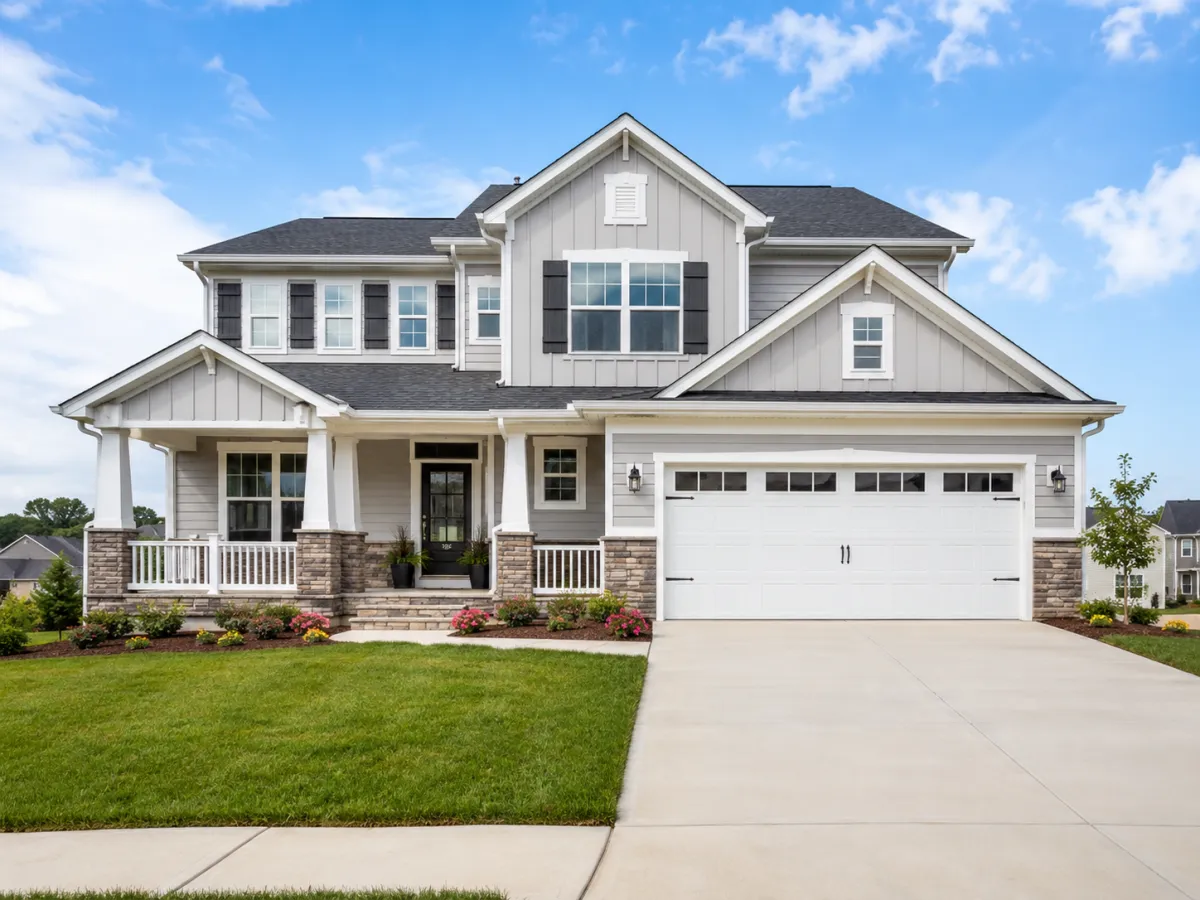
Should I Sell Before I Buy in Indian Trail, NC?
No, you don't have to sell before you buy in Indian Trail. But you do need a plan for the gap in between, and that's where most people get stuck.
Quick Answer: In most cases, you don't have to sell your Indian Trail home before you buy your next one. Jennifer Ledford, top 3% agent among 18,000+ in the Charlotte area, structures contingent offers and bridge strategies so her clients move on their own timeline instead of a rushed one.
I get this question almost every week, usually from someone sitting at their kitchen table trying to figure out the order of operations. Sell first and risk needing a place to stay? Buy first and risk carrying two mortgages? Neither option sounds great when you say it out loud like that. In my 10+ years working the Union County market, I've found the real answer is almost never "pick one." It's about sequencing the right way for your specific situation.
What's actually driving this question right now
Indian Trail homes are moving fast. The average sale time is running well under two months in most price bands, according to Redfin data for the 28079 zip code. That's tighter than it's been in a couple of years, and it changes the math on selling first.
Here's the tension. If you sell first in a market like this, you might close in 75 days, days on the market is currently 45 days plus a 30-day closing, and find yourself asking your buyer for a rent-back while you search for your next place. If you buy first, you're carrying two payments until your current home sells, which for most people isn't sustainable for long.
The median list price in Indian Trail is sitting around $470,000, per MLS data for June, with homes in some price bands seeing multiple offers within the first week. That's good news for your equity. It also means you can't assume your next purchase will move at the same pace as everyone else's, especially if you're looking at newer construction in a community like Sanctuary at Southgate or Moore Farm, where inventory comes and goes in waves.
Zoom out to the broader Charlotte Metro and the picture gets a little more nuanced. Active listings across the region have climbed 19.5% year over year, based on recent market data, which means buyers overall have more room to negotiate than they did a couple years ago. But Indian Trail hasn't loosened up the same way. Newer construction communities here are still absorbing demand from buyers who got priced out of Waxhaw or South Charlotte and landed here instead. That's part of why sellers in this specific market still have more leverage than the regional headlines might suggest.
The real cost of getting the order wrong
Let's talk numbers for a second, because this is where the anxiety actually comes from. Say you buy your next home before your current one sells. You're now carrying two mortgage payments, maybe two sets of utilities, and possibly a bridge loan payment on top of it. Even a few months of that adds up fast, and it's real money out of your pocket regardless of how much equity you're sitting on.
Now flip it. You sell first without a plan for where you'll land. You close, you get your check, and then you're renting a short-term place or crashing with family while you scramble to find your next home in a market that isn't waiting around for you. That's not a financial cost so much as a stress cost, but I've watched it wear people down just as much as a double mortgage payment would.
This is exactly why I don't think "sell first" or "buy first" is the real question. The real question is: what structure protects you from both of those outcomes at once? That's where a rent-back, a contingency, or a bridge strategy earns its keep.
The three ways to sequence this
Option one: sell with a rent-back. You sell your home, close, and negotiate 30 to 60 days of occupancy while you find your next one. This works well in Indian Trail right now because buyers are motivated and often willing to be flexible on possession date to win the deal. The upside is you're not carrying two mortgages for a single day. The trade-off is you're committing to a firm move-out date before you've necessarily found your next home, so this option works best if you're confident in how quickly you can find something you like.
Option two: buy with a contingency. You make an offer on your next home contingent on selling your current one. This is harder to get accepted in a competitive market, but it's not impossible, especially if your home is already prepped and priced to move quickly, or if the home you want has been sitting a little longer than the seller would like. I've had success structuring these when the buyer's current home is already listed or under contract, since it gives the seller confidence the contingency won't drag on indefinitely.
Option three: bridge financing or a HELOC. You tap the equity in your current home to fund the down payment on the next one, then sell once you're settled. This isn't right for everyone, and it does come with added cost, whether that's interest on the bridge loan or a HELOC payment stacked on top of your current mortgage. But for a family with strong equity in a home in Union Grove or Heritage, it can remove the timing pressure completely and let you shop for your next home the same way a cash buyer would.
None of these three options is automatically "best." I've had clients use all three depending on their equity position, their job situation, and honestly, how much uncertainty they could personally handle. Part of my job is walking through the real numbers with you so the choice feels obvious instead of stressful.
I've helped 250+ buyers and sellers in the Charlotte Metro navigate exactly this decision, and the right option almost always comes down to two things: how much equity you're sitting on, and how flexible your moving timeline actually is. If you're not sure where you stand, check what your Indian Trail home is worth right now before you decide which option fits.
Who's buying in Indian Trail right now
A lot of the demand I'm seeing comes from buyers commuting into Charlotte's core employment centers, either up I-485 toward the financial district and uptown, or over toward the Ballantyne Corporate Park where companies like Honeywell and Red Ventures have a big employee base. Indian Trail gives those commuters a real trade-off: a longer drive in exchange for meaningfully more house and a lower price tag than they'd find closer in.
I'm also seeing buyers who already live in Indian Trail and simply want to move within it, usually trading up from an older resale into one of the newer construction communities. If that's you, timing matters even more, because you're not just competing with outside buyers, you're competing with your neighbors for the same handful of new listings.
What this looks like for schools and neighborhoods
If you're staying in Indian Trail for your next home, school zoning is usually part of the decision. Families zoned for Sun Valley High and Sun Valley Middle tend to want to stay in that zone if their kids are mid-way through school, which narrows your search and makes timing even more important. Families with younger kids zoned for Poplin Elementary or Hemby Bridge Elementary sometimes have a little more flexibility to widen their search radius.
As a listing specialist in this market, I've seen firsthand that buyers moving within Indian Trail often want the same trade they already have: newer construction, a bit more square footage, and a shorter commute to Monroe or the Matthews corridor for daily errands. The dining scene here is still catching up to the population growth, which I'll always tell clients honestly. Most people end up running to Waxhaw (about 15 minutes away) or the Matthews corridor for a bigger night out, and that's a fair trade for the value you get here.
For weekend time, Crooked Creek Park gets a lot of use from local families, and Cane Creek Park in Union County is worth the short drive if you want real hiking trails and lake access.
Getting your home ready to move fast
Whichever sequencing option makes sense for you, the strategy only works if your home is genuinely ready to sell quickly. That means pricing it accurately from day one instead of testing the market high, because in a fast-moving Indian Trail market, an overpriced listing sits while comparable homes sell around it, and every extra week on market weakens your negotiating position for a rent-back.
It also means handling the obvious repairs before you list, not during your due diligence period. Buyers moving into newer construction communities nearby expect a certain level of finish, so a home that shows well against that comparison sells faster and gives you more room to ask for flexible terms.
After 250+ closings in this market, what I've learned is sellers who prep their home properly in the first two weeks almost always end up with more leverage in every other part of the negotiation, including timing.
What I'd tell you if you were sitting across from me
If your home has strong equity and you're not in a rush, I usually recommend listing first with a rent-back built into the offer. It gives you leverage in your next negotiation because you're not a contingent buyer, and Indian Trail sellers right now are in a strong enough position to ask for that flexibility.
If your equity is thinner or your next purchase is time-sensitive (a job relocation, a school year deadline), a bridge strategy or a well-structured contingency might make more sense. There's no universal right answer here. There's only the right answer for your numbers and your timeline.
If you want a real number on what your Indian Trail home could sell for before you decide anything, start with a free home value estimate. It costs you nothing and it's the first real input into this whole decision.
I also wrote about what's changed in Weddington since 2016 if you're weighing Indian Trail against a more established market, and a piece on Stanly County for first-time and value-focused buyers if space and price are what matter most to you right now.
Frequently asked questions
Do I need to sell my house before I can buy another one in Indian Trail? No. Most sellers in Indian Trail can list first and negotiate a rent-back, or explore bridge financing so they can buy before selling. The right path depends on your equity and your timeline.
How long does it take to sell a home in Indian Trail right now? Homes in the 28079 zip code have been selling in well under two months on average recently, though this shifts by price point and condition. 30 days is the most current figure, per Canopy MLS data for this month.
What is a rent-back and how does it help with timing? A rent-back lets you stay in your home after closing, usually for 30 to 60 days, while you finish your search for your next home. It's a common and often welcomed request in a market where buyers are motivated to win the deal.
Is Indian Trail a good place to buy if I already live here and want to stay? Yes, especially if you're zoned for Sun Valley schools and want to stay in that district. Inventory in newer communities like Sanctuary at Southgate and Moore Farm moves quickly, so timing your search around your sale matters more here than in a slower market.
Watch: the same question, answered on video
I broke down this exact "sell first or buy first" question on video this week for one of my core markets. The neighborhood is different, but the thinking behind it is exactly the same.
Watch the video: MYTH: SELL FIRST
About Jennifer Ledford: Jennifer Ledford is a licensed real estate agent with The Ledford Group at eXp Realty LLC, serving buyers and sellers across Mecklenburg, Union, Stanly, and York Counties since 2016. She is among the top 3% of 18,000+ agents in the Charlotte Metro, an eXp ICON, and has guided 250+ clients through some of the most significant transactions of their lives.
Jennifer Ledford | 704-607-6996 | https://the-ledford-group.com