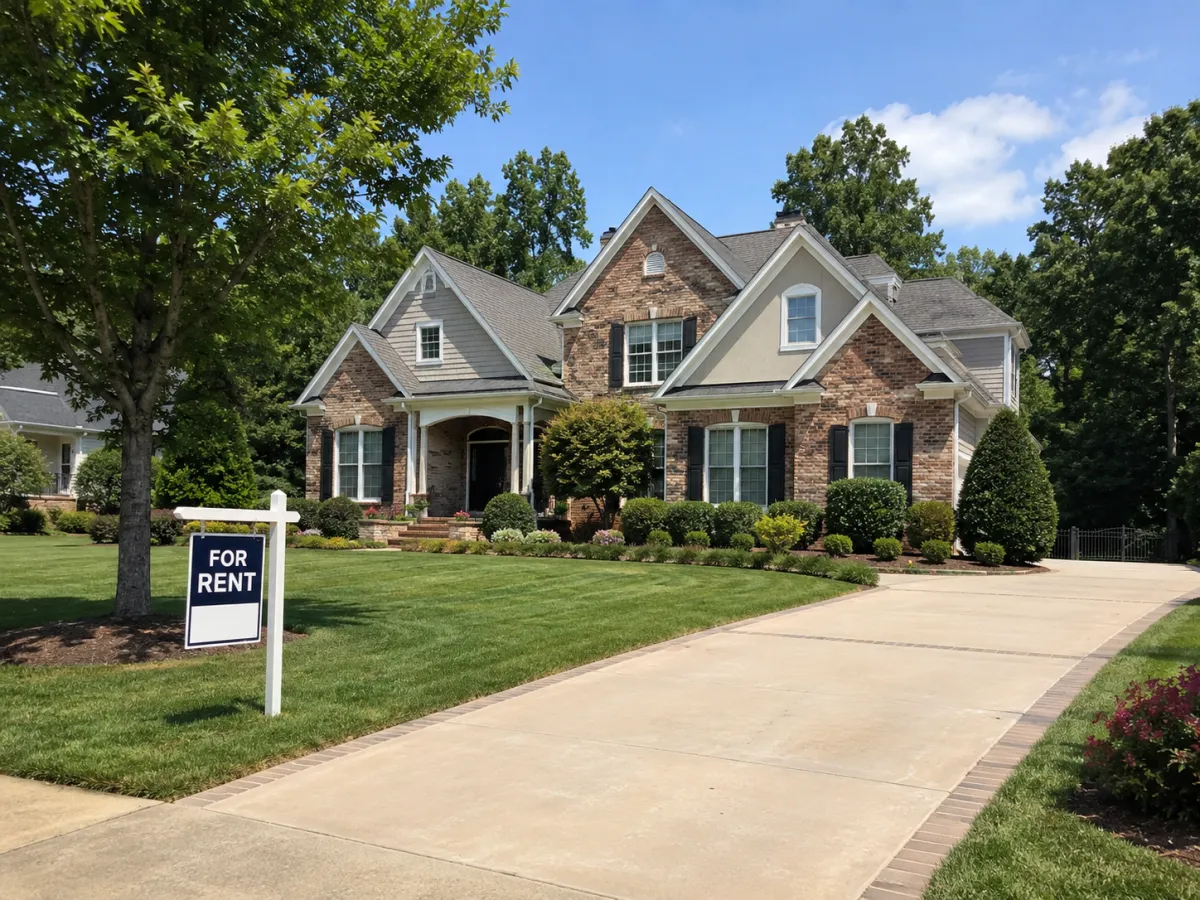
What Converting Your Old Weddington Home Into a Rental Actually Costs You at Tax Time
Converting your Weddington home into a rental instead of selling it sounds simple. It isn't free, and the tax bill often shows up years later when you least expect it.
I'm Jennifer Ledford with The Ledford Group. In my 10+ years working the Weddington market, I've watched more than one homeowner get excited about rental income and skip the math that matters most, what happens when you eventually sell.
Quick Answer: Renting out your old Weddington primary residence lets you depreciate the building over 27.5 years and generate income, but it can cost you the Section 121 capital gains exclusion if you wait too long to sell, and depreciation recapture is taxed at up to 25% federal when you do. I'm Jennifer Ledford, top 3% agent among 18,000+ in the Charlotte area, and I walk investor clients through this exact decision regularly.
The exclusion you could be giving up
If you've lived in your Weddington home as your primary residence, you likely qualify for the Section 121 exclusion, up to $250,000 in gains tax free if you're single, or $500,000 if you're married filing jointly. To keep that exclusion, you need to have owned the home for at least two years and lived in it for at least two of the five years before you sell.
Here's the part people miss. That five year clock keeps running once you convert to a rental. If you rent the home out for three years and then decide to sell, you're right at the edge of losing the exclusion entirely. Sell in year four or five as a rental, and it's gone.
Depreciation helps now, costs you later
Once your Weddington home becomes a rental, you can depreciate the building's value, not the land, over 27.5 years. That deduction reduces your taxable rental income every year you own it, which is real money back in your pocket while you hold the property.
The catch is depreciation recapture. When you eventually sell, the IRS taxes the depreciation you claimed, or even depreciation you were entitled to claim but didn't, at a maximum federal rate of 25%. That's on top of whatever capital gains tax applies to the appreciation itself. A lot of first time landlords don't budget for this until their accountant walks them through the sale.
The neighborhoods where I see this question most
This comes up most often in Atherton and Bromley, where a lot of original owners bought fifteen to twenty years ago and are sitting on significant equity. It's also a common question in Weddington Preserve, where newer owners sometimes get relocated for work and consider renting rather than selling into an uncertain moment.
Weddington schools, Weddington High and Weddington Middle, are part of what makes these homes rent well if you do decide to hold. Tenant demand in a top rated school zone tends to stay steady even when the broader rental market softens.
Tenants in this price range also value the lifestyle, not just the school zone. Weddington Swim & Racquet Club and its active pickleball and tennis scene is a real draw for renters relocating from out of state, and a Friday night at Duckworth's Grill & Taphouse is the kind of local detail that helps a rental listing stand out from a generic property management photo set.
The honest read
If your Weddington home would rent for enough to cover the mortgage, taxes, and insurance with room left over, and you're not planning to sell within the next two to three years, renting can make sense. Just go in knowing the exclusion clock and the recapture bill are both real costs, not hypotheticals.
If the numbers are close and you're not sure which way to go, run your actual home value first. Find out what your Weddington home is worth right now before you commit to either path.
Frequently asked questions
How long can I rent my house before I lose the primary residence exclusion? You need to have lived in the home for at least two of the five years before you sell to keep the Section 121 exclusion. Rent it past that window and you generally lose access to the $250,000 or $500,000 tax free gain.
What is depreciation recapture on a converted rental property? It's the tax the IRS collects on the depreciation you claimed while renting the property, charged at up to 25% federal when you sell. It applies even if you didn't claim the full depreciation you were eligible for.
Is it better to sell or rent my Weddington home? It depends on your timeline. If you might sell within two to three years, selling now usually protects your tax exclusion. If you plan to hold long term and the rent covers your costs, renting can build wealth despite the eventual recapture.
Do I need a 1031 exchange if I sell a converted rental? A 1031 exchange lets you defer capital gains and depreciation recapture by rolling the proceeds into another investment property. It only applies to investment property, not your personal residence, so timing the conversion and the eventual sale matters.
Want to find out what your Weddington home is worth as a sale versus a rental? Get your free home value estimate here and I'll walk you through both numbers honestly.
Curious how this same math plays out for buyers deciding whether to purchase in Marvin instead of holding elsewhere. I cover the fall 2026 Marvin buyer picture here.
About Jennifer Ledford: Jennifer Ledford is a licensed REALTOR with The Ledford Group at eXp Realty LLC, serving buyers and sellers across Mecklenburg, Union, Stanly, and York Counties since 2016. She is among the top 3% of 18,000+ agents in the Charlotte Metro, an eXp ICON, and has guided 250+ clients through some of the most significant transactions of their lives. Reach her at 704-607-6996 or https://the-ledford-group.com.
Jennifer Ledford | 704-607-6996 | https://the-ledford-group.com